
Why Young People Are Reading More Again
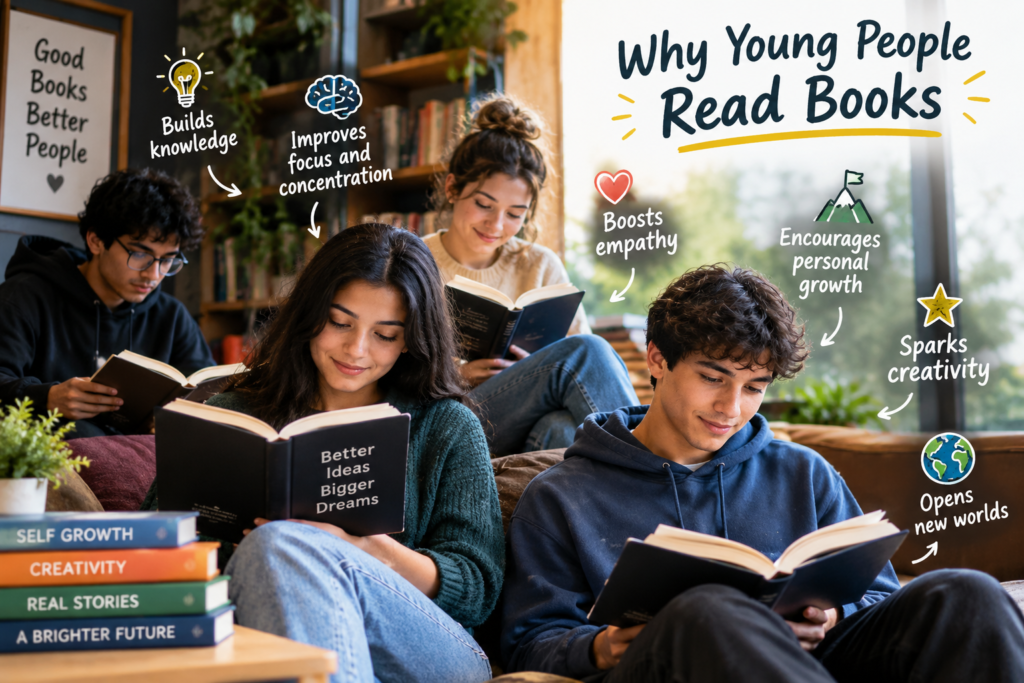
For years, many people believed that young people were gradually losing interest in books. Smartphones, social media, streaming platforms, and online entertainment seemed to leave little room for traditional reading. Yet a different trend has begun to emerge. Books are finding their way back into the daily lives of many teenagers and young adults.
Reading is no longer limited to quiet libraries, school assignments, or shelves filled with classic novels. Young readers are discovering books through social media, online communities, recommendations from friends, and digital platforms. They are also choosing books for entertainment, emotional connection, personal growth, and escape.
So, why are young people reading more again? The answer is a combination of technology, changing reading habits, social influence, and a growing desire for meaningful experiences.
The Changing Image of Reading
Reading has traditionally been viewed as a solitary activity. A person picked up a book, found a quiet place, and read without interruption. Today, the experience can be much more social.
Young readers can discuss a novel with people from different countries, share favorite passages, post reviews, and discover recommendations within minutes. Books have become part of online conversations rather than something that exists separately from digital culture.
This change has made reading feel more accessible and engaging to a generation that spends a significant amount of time online.
Reading Is Not Disappearing—It Is Changing
The idea that young people have simply stopped reading is too simple.
Their reading habits are changing along with technology and culture. Some readers move between paperbacks, e-books, audiobooks, online reviews, and social media communities.
The definition of being a reader has become broader.
Someone might listen to an audiobook during a morning walk, read a physical novel before bed, and discover the next title through a social media recommendation. These activities are different, but they all demonstrate an ongoing interest in stories and ideas.
What This Trend Means for the Future of Books
The renewed interest in reading offers opportunities for authors, publishers, libraries, educators, and independent booksellers.
Understanding young readers means recognizing that they are not necessarily rejecting books. They are looking for books in formats, genres, communities, and platforms that fit their lives.
The future of reading may therefore be less about choosing between traditional and digital experiences and more about combining them.
Books can remain powerful while adapting to the ways modern audiences discover, discuss, and consume information.
Conclusion
Young people are reading more again because books have found new ways to fit into modern life.
Social media has made book discovery faster. Online communities have made reading more social. Audiobooks and e-books have made books more convenient. Popular adaptations have introduced new audiences to stories, while relatable characters and diverse perspectives have strengthened emotional connections.
Most importantly, books offer something that endless scrolling cannot always provide: the opportunity to slow down, imagine, reflect, and become deeply involved in an idea or story.
The return of reading among young people is therefore not simply a return to an old habit. It represents a new reading culture—one where traditional books and modern technology exist side by side.
And perhaps that is the most encouraging part of the trend: despite living in an increasingly digital world, young people are still making room for stories.
Primary keyword
Main topic
Can AI write a better novel than a human?
Secondary keywords
AI novel writing
AI vs. human writers
Can AI write a novel?
Artificial intelligence and fiction
Human creativity in storytelling
Future of novel writing
AI-generated fiction
Long-tail keywords
Can AI write a better book than a human?
Is AI good at writing novels?
Will AI replace human novelists?
How does AI compare with human authors?
Can AI create original stories?